theMilesWeKeep
A Day in the Herd: Where Rescue Meets Respect
June 13, 2026
There are certain travel experiences that make for great photos.
And then there are experiences that quietly change the way you see the world.
Spending a day with the elephants at Elephant Jungle Sanctuary outside Chiang Mai was firmly in the second category.
Before visiting Thailand, I knew I wanted to see elephants. What I didn’t know was how important it would be to choose an ethical sanctuary—and how much more meaningful that choice would make the experience.
Why Ethical Sanctuaries Matter

For decades, elephants throughout Southeast Asia were used in logging operations, labor camps, tourist attractions, and circuses. Many endured harsh training practices, long hours of work, and conditions that prioritized entertainment over animal welfare.
Today, ethical sanctuaries provide a different future.
Instead of riding elephants, watching them perform tricks, or forcing interactions, these sanctuaries focus on rescue, rehabilitation, and allowing elephants to simply be elephants.
At Elephant Jungle Sanctuary, every elephant has a story. Throughout the day, we learned about where they came from, the challenges they faced, and the relationships they have developed with their caretakers since being rescued.
Many of the elephants had previously worked in labor camps or traveled with circuses before finding their way to the sanctuary. Hearing those stories transformed the experience from tourism into education.
A Day in Their World
From the moment we arrived, it was clear that this wasn’t going to be a passive experience.
For an entire day, we were immersed in the elephants’ daily lives.
One of the most remarkable aspects of the sanctuary was the nearly one-to-one ratio between visitors and elephants. Rather than competing with large crowds for a brief interaction, we spent meaningful time getting to know individual elephants and observing their unique personalities.
Some were playful.
Some were curious.
Some seemed content to quietly enjoy an endless buffet of fruit.
Just like people, no two elephants were exactly alike.
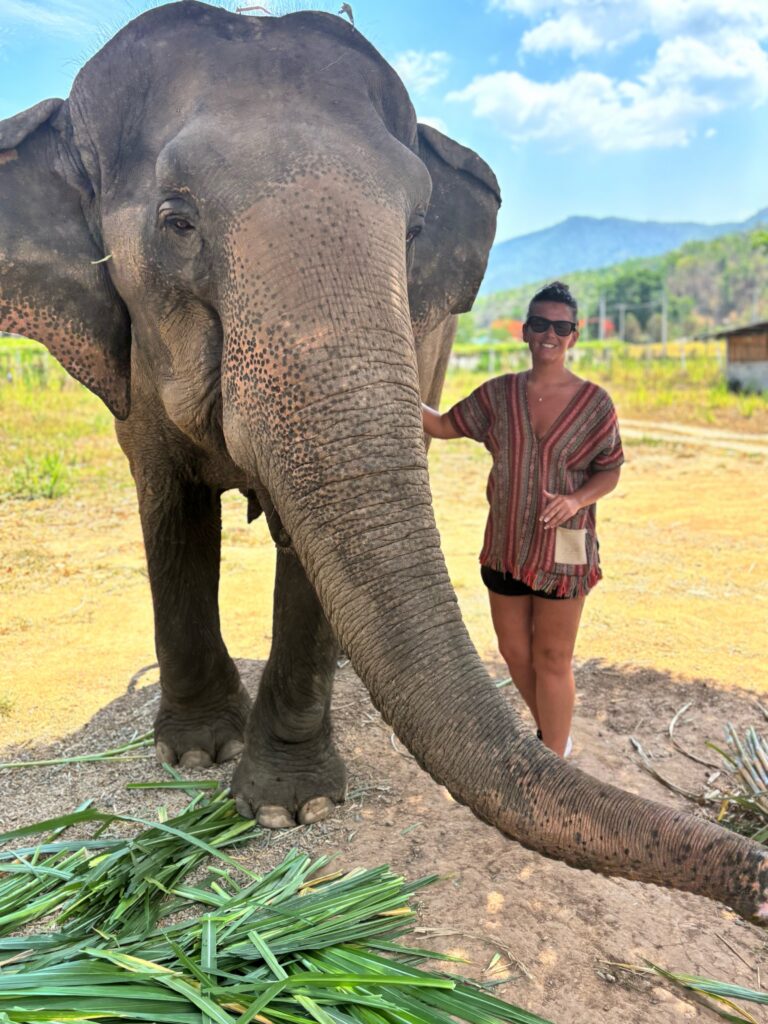
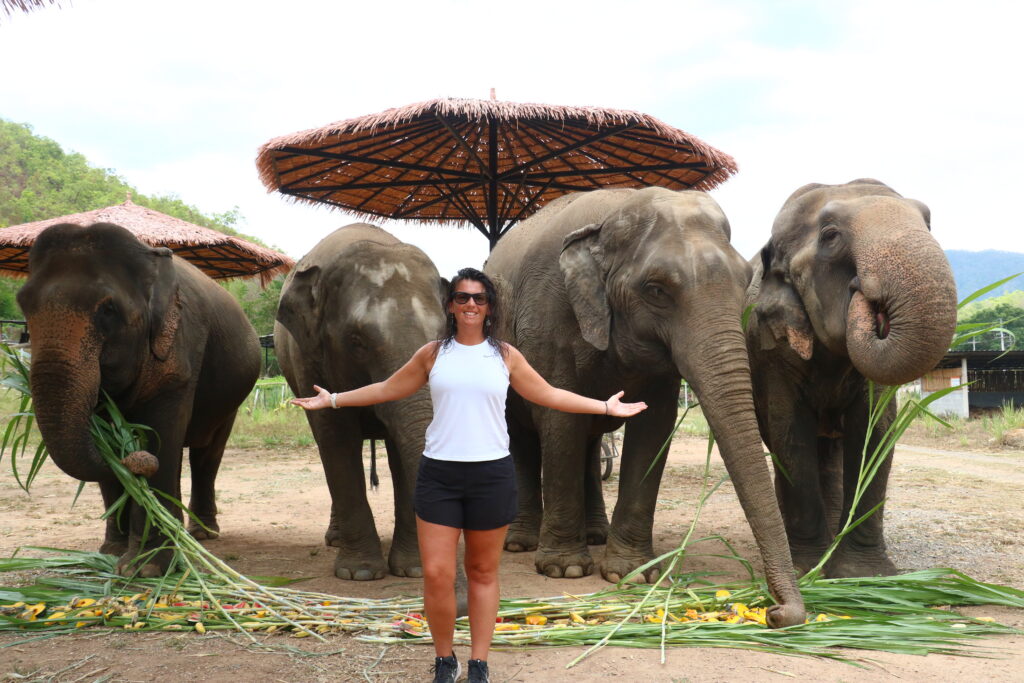
We fed them baskets overflowing with bananas, watermelon, and other treats. Watching an elephant gently reach out with its trunk to accept food from your hand is both humbling and surprisingly emotional. Despite their massive size, there is a softness to them that immediately puts you at ease.
We fed them, learned their stories, walked beside them through the sanctuary, and eventually joined them for two of their favorite activities: bath time and a mud bath.
Bath Time
One of the highlights of the day was joining the elephants for bath time.
Together, we walked with them into the water and helped rinse away the dust and dirt from their morning adventures. Standing beside an elephant while gently splashing water across its back is a surreal experience.
As part of the sanctuary’s nearly one-to-one visitor-to-elephant ratio, I was assigned my own elephant for bath time. Her name translated to “Naughty,” which felt fitting for both of us.

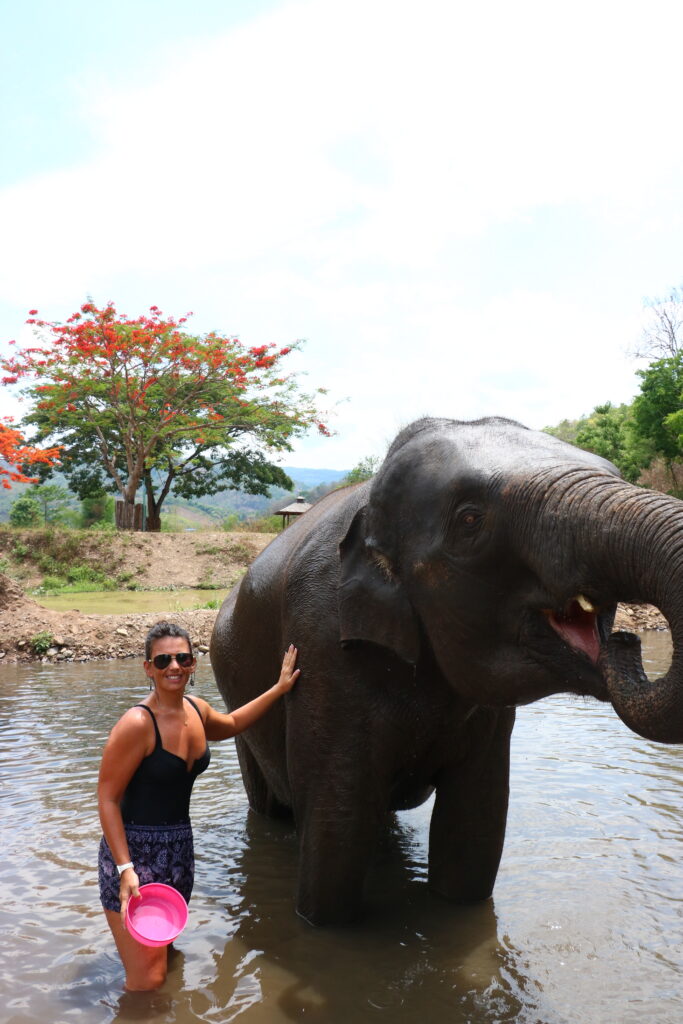
What I quickly learned was that bathing an elephant isn’t exactly a one-way activity.
For every bucket of water I splashed onto her, she seemed determined to return the favor. More than once, she filled her trunk and sent a perfectly timed spray of water directly back at me. Whether she was cooling off or simply enjoying the game remains up for debate.
These animals are enormous, yet incredibly gentle, and seeing that playful side of her personality made the experience even more memorable.
The interaction felt less like observing wildlife and more like participating in their daily routine.
There were no performances. No tricks. No staged moments.
Just an elephant named Naughty keeping me on my toes while we both enjoyed an afternoon bath.
The Mud Bath
If bath time allowed us to care for the elephants, the mud bath allowed us to fully embrace life as part of the herd.
Elephants naturally use mud to protect their skin from the sun and insects, and visitors are invited to join them in the process.
What started as a gentle coating of mud quickly turned into a full-body mud battle.
There is something wonderfully freeing about standing ankle-deep in mud beside a several-ton elephant who is having the absolute time of its life. Everyone was laughing, covered head to toe in mud, and fully embracing the experience.

Travel has a funny way of reminding us that joy often comes from the simplest moments.
And while no one leaves the mud pit looking their best, everyone leaves with a smile.
The People Behind the Experience
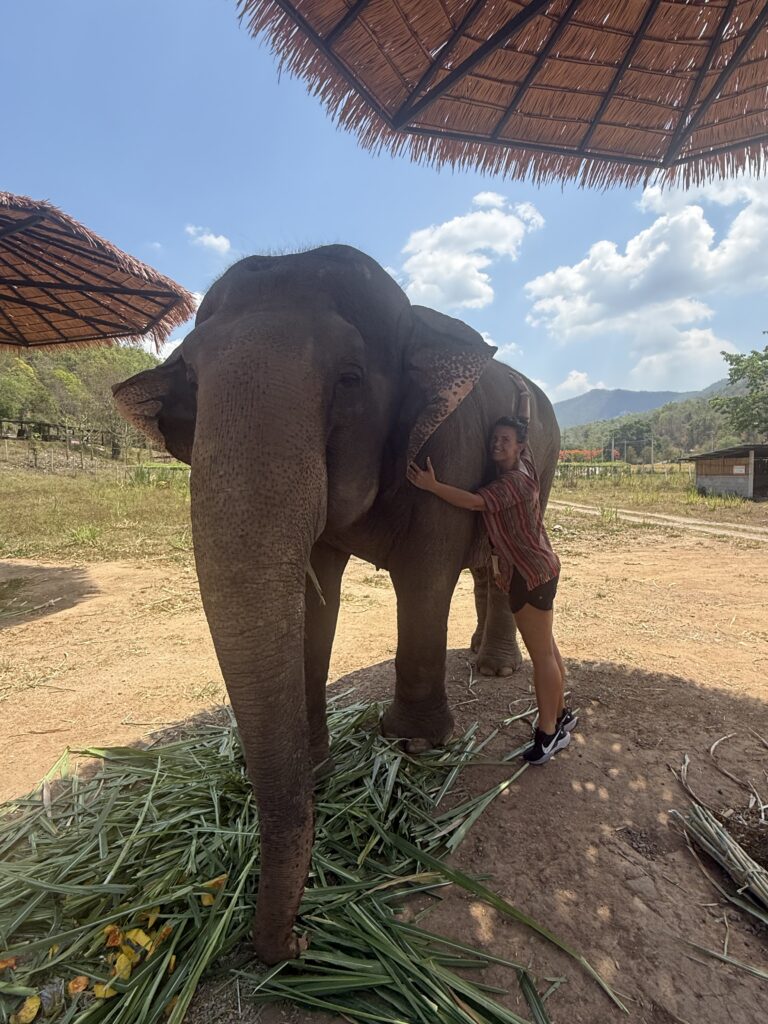
While the elephants are undeniably the stars of the show, what left an equally strong impression were the caretakers.
Throughout the day, they shared stories about each elephant, explained their care routines, and demonstrated the deep bonds they have developed over years together.
It was obvious that these relationships were built on trust.
Many of the caretakers have dedicated their lives to working with elephants, and their passion for the animals was evident in every interaction. Seeing the patience and dedication required to help these elephants heal provided a powerful reminder that conservation is ultimately about people and animals working together.
A Different Kind of Bucket List Experience
Visiting an elephant sanctuary is a common item on many Thailand itineraries.
But not all elephant experiences are created equal.
Choosing an ethical sanctuary means supporting organizations that prioritize the well-being of the animals over tourist entertainment. It means learning their stories instead of simply taking their picture. And it means leaving with a deeper understanding of both the challenges elephants face and the efforts being made to protect them.
By the end of the day, we were exhausted, muddy, soaked, and smiling.
More importantly, we left with a greater appreciation for these incredible animals and the people working to give them a better future.
In a trip filled with temples, markets, mountains, and unforgettable food, spending a day with Chiang Mai’s gentle giants remains one of the experiences I’ll remember most.
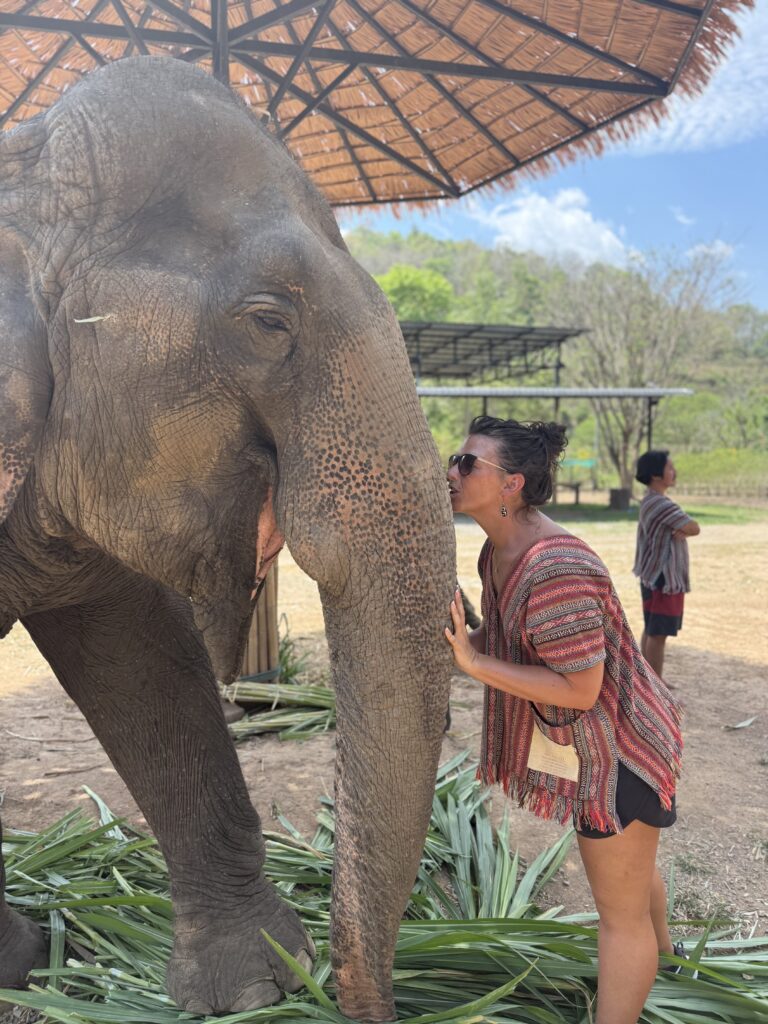
Not because I got close to an elephant.
But because, for a few hours, I got a glimpse into their world.
Leave a Reply
X
X


Add a comment
0 Comments